

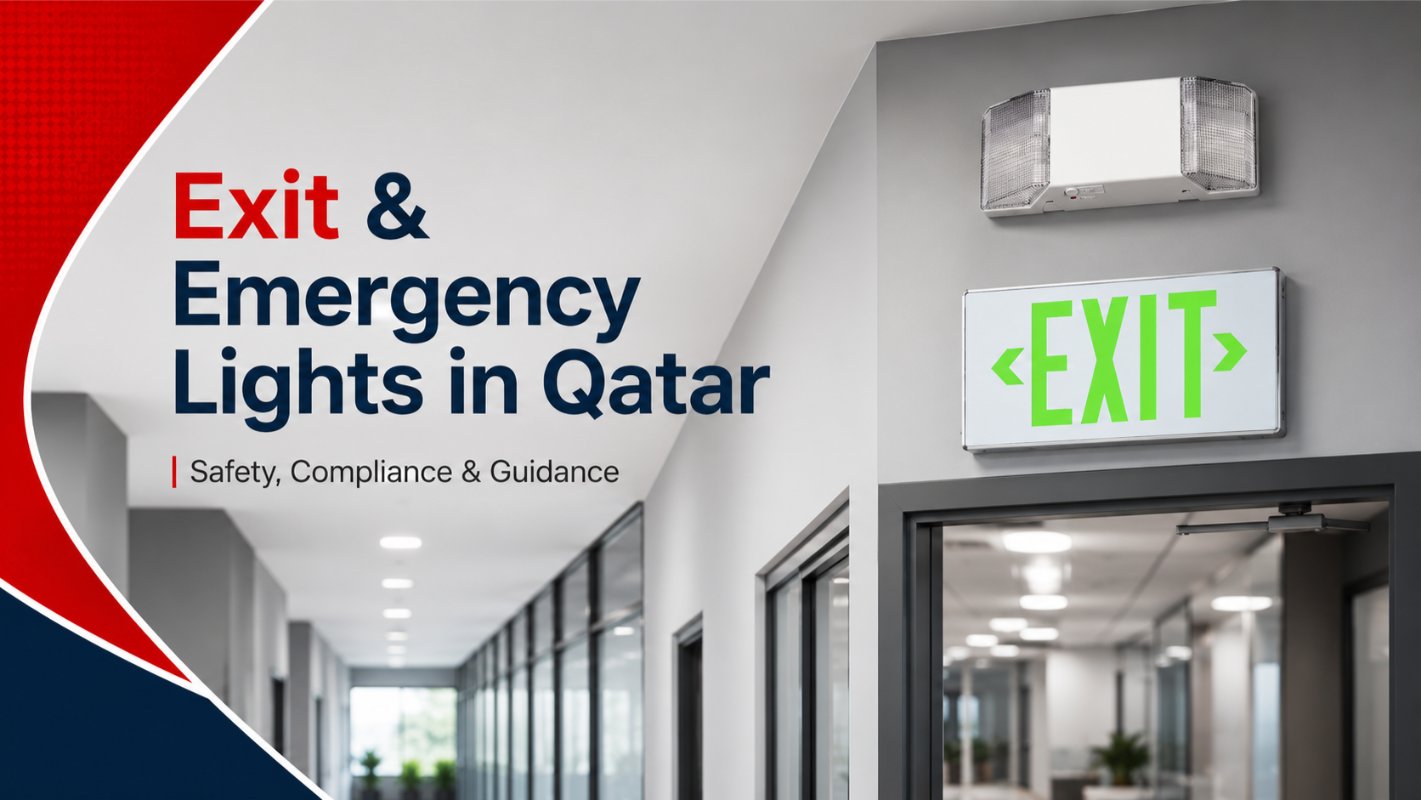
 Emergency Lighting
Exit and emergency lights are among the most important life safety systems inside any building. They may look simple, but during a fire, power failure or evacuation, they guide people toward safe exit routes when normal visibility is reduced. In Qatar, where commercial buildings, warehouses, hotels, residential towers, schools, malls and industrial facilities operate with strict fire safety expectations, properly installed exit and emergency lighting is not optional. It is part of responsible building safety and Civil Defence compliance.
For building owners, facility managers, consultants and contractors, the goal is not only to install lights on walls and ceilings. The real purpose is to make sure every occupant can identify the nearest exit, move through corridors and staircases safely, and evacuate without confusion when the main power supply fails.
At Cease Fire Solutions, we support buildings across Qatar with reliable exit and emergency lighting solutions, including supply, installation, testing and maintenance. This guide explains why these systems matter, where they are typically installed, how they support compliance, and when your building may need inspection or upgrading.
Why Are Exit and Emergency Lights Important in Qatar?
Exit and emergency lights are important because they help people evacuate safely during fires, power failures and other emergencies. Exit lights clearly identify escape routes and final exits, while emergency lights illuminate corridors, staircases and critical movement areas when normal lighting fails.
In Qatar, these systems are especially important because many buildings have high occupancy, complex layouts, basement areas, enclosed corridors and limited natural light in certain zones. A working emergency lighting system reduces panic, supports orderly evacuation and helps building owners maintain fire safety compliance.
If your building’s exit signs are dim, damaged, wrongly positioned or not working on backup power, the risk is not just technical failure. It can become a serious life safety concern during an actual emergency.
What Are Exit Lights and Emergency Lights?
Exit and emergency lights work together, but they do not perform the same function. Understanding the difference helps building owners choose the right system and maintain it correctly.
Exit Lights
Exit lights are illuminated signs that show occupants where to leave the building. They are normally installed above exit doors, along escape routes and at directional points where occupants need guidance. In many buildings, exit signs remain visible at all times so people can quickly identify the correct route during normal use and emergencies.
A good exit light should be easy to see, properly positioned and suitable for the viewing distance of the area. In larger facilities, directional exit signs may also be required to guide people through corridors, junctions and routes where the final exit is not immediately visible.
Emergency Lights
Emergency lights provide illumination when the main power supply fails. They are commonly installed in corridors, staircases, lobbies, escape routes, plant rooms, basements, assembly areas and other locations where sudden darkness could create risk.
These lights normally operate through built-in batteries, central battery systems or other approved backup power arrangements. When normal lighting fails, the emergency lights activate automatically so occupants can continue moving safely.
Exit Lights vs Emergency Lights
Exit lights tell people where to go. Emergency lights help people see the path while they are going there. A safe building needs both because a visible exit sign alone is not enough if the corridor, staircase or escape route is dark.
For example, an exit sign above a stair door may show the correct direction, but emergency lights are still needed to illuminate the stairs, landings and movement route. When planned together, both systems create a complete evacuation guidance system.
Why Exit and Emergency Lighting Matters for Buildings in Qatar
Exit and emergency lighting is not only a product requirement. It is a practical safety system that becomes critical during moments of stress, smoke, darkness or building disruption. In Qatar’s commercial and industrial environment, where many properties operate long hours and accommodate visitors, staff, tenants and contractors, clear evacuation guidance must be available at all times.
A properly designed lighting system supports three key priorities: safe movement, compliance and operational responsibility.
1. Safe Evacuation During Fire and Power Failure
During a fire or electrical failure, normal lights may stop working. Smoke can reduce visibility, occupants may become disoriented, and people unfamiliar with the building may not know the nearest exit. Exit and emergency lighting reduces confusion by keeping escape routes visible and clearly marked.
This is especially important in buildings with multiple floors, basement parking, long corridors, internal rooms, warehouses, service areas and large public spaces. When lighting is clear and reliable, evacuation becomes faster, safer and more organised.
2. Visibility in Corridors, Staircases and Escape Routes
Corridors and staircases are critical during evacuation because many occupants may use the same routes at the same time. Poor lighting in these areas increases the risk of slips, falls, crowding and wrong turns.
Emergency lights should be positioned to support movement along the full escape path, not only near exit doors. Areas such as direction changes, stairs, level changes, firefighting equipment points and final exits often need careful attention during design and inspection.
3. Civil Defence Compliance and Building Responsibility
In Qatar, fire safety compliance is a serious responsibility for building owners, consultants, contractors and facility managers. Emergency lighting and exit signage form part of the wider life safety system that supports safe evacuation.
The responsibility does not end after installation. Lights must remain functional, visible, undamaged and ready to operate on backup power. Regular inspection and maintenance help identify weak batteries, damaged fittings, failed lamps, loose fixtures and blocked signage before they become a safety issue.
Where Should Exit and Emergency Lights Be Installed?
Emergency lighting must be planned according to the building layout, occupancy type, approved drawings, escape route design and Civil Defence requirements. A small office, a hotel, a warehouse and an industrial facility will not have the same lighting layout.
The purpose is always the same: occupants should be able to identify exits and move safely from occupied areas to a protected route and final exit.
Common Installation Areas
Exit and emergency lights are commonly installed in corridors, staircases, exit doors, lobbies, lift landing areas, basement parking areas, plant rooms, electrical rooms, assembly areas, warehouses, kitchens, service corridors and public movement zones.
They may also be required near changes in direction, changes in floor level, intersections of corridors, fire alarm call points, firefighting equipment and first-aid points, depending on the approved design and authority requirements.
The correct location is just as important as the product itself. A high-quality emergency light installed in the wrong place may still fail to support safe evacuation.
Building Types That Need Emergency Lighting
Exit and emergency lighting is important for almost every occupied building, especially where people may not be familiar with the layout. This includes commercial offices, shopping malls, hotels, restaurants, hospitals, clinics, schools, labour accommodations, apartment buildings, warehouses, factories, workshops, showrooms, mosques, event venues and industrial facilities.
In high-traffic properties, emergency lighting also helps security staff, maintenance teams and emergency responders move through the building safely during an incident.
QCDD Compliance and Fire Safety Requirements in Qatar
Qatar’s fire safety requirements are enforced through Civil Defence approval, inspection and compliance processes. Emergency lighting and exit signage are part of the wider means of egress strategy, which focuses on helping occupants leave a building safely during an emergency.
For building owners and facility managers, the most important point is simple: exit and emergency lights must be suitable for the building, installed in the right locations, connected to reliable backup power and maintained in working condition.
Compliance should be confirmed through approved drawings, site inspection, testing records and proper maintenance documentation. If your building is undergoing fit-out, renovation, Civil Defence renewal or operational inspection, emergency lighting should be reviewed before the final stage, not after a failed inspection.
Cease Fire Solutions can inspect existing exit and emergency lighting systems, identify visible issues and recommend suitable corrective action based on your building type and safety requirements.
Installation, Testing and Maintenance Best Practices
A reliable emergency lighting system depends on good design, correct installation and regular maintenance. Many failures happen because lights were installed years ago and then ignored until an inspection or emergency.
A proactive maintenance approach is safer, more cost-effective and better for compliance.
1. Correct Placement
Emergency lights should be positioned to illuminate escape routes clearly. Exit signs should be visible from the approach direction and should not be hidden by doors, décor, ceiling features, shelves, partitions or signage clutter.
In large or complex buildings, directional signs should help occupants understand the route before they reach a decision point. The system should guide people naturally from occupied spaces to the nearest safe exit.
2. Backup Power and Battery Condition
Emergency lights are only useful if they work when the main power fails. Batteries, charging circuits and backup power connections must be checked regularly. A light that works under normal power but fails on battery backup can give a false sense of safety.
LED emergency lights are commonly preferred because they consume less power, provide strong visibility and usually require less frequent lamp replacement than older fittings. However, even LED systems still need testing, cleaning and battery checks.
3. Routine Testing and Documentation
Testing should confirm that exit and emergency lights activate correctly, remain illuminated for the required duration and show no signs of damage, weak output or battery failure.
Facility teams should maintain records of inspection, testing, replacement and corrective work. These records are valuable during audits, Civil Defence-related reviews, insurance checks and internal safety inspections.
If your building does not have updated emergency lighting maintenance records, it is a strong sign that a professional inspection is needed.
Common Problems Found During Emergency Lighting Inspections
Many emergency lighting problems are easy to miss during daily operations. The building may look safe under normal lighting, but the weakness appears only when the power supply is interrupted or a full test is carried out.
Common issues include dead batteries, damaged exit signs, missing directional signs, lights blocked by interior changes, incorrect placement after fit-out work, weak illumination, disconnected fittings, broken covers, outdated units and lack of maintenance records.
In some buildings, partitions, shelves, false ceilings or renovation work can unintentionally block the original exit signage. That is why emergency lighting should be reviewed whenever the layout changes.
When Should You Upgrade Exit and Emergency Lights?
You should consider upgrading your exit and emergency lights if the system is old, dim, damaged, difficult to test or no longer suitable for the current building layout. Upgrading may also be required after renovations, occupancy changes, Civil Defence comments or repeated maintenance failures.
Modern emergency lighting systems can offer better visibility, lower energy consumption, improved battery performance and cleaner installation options. Larger buildings may also require more organised monitoring and maintenance planning to keep the full system reliable.
If you are unsure whether your current lights are suitable, the safest step is to arrange a site inspection. A professional review can identify whether you need simple maintenance, battery replacement, additional fittings or a full upgrade.
Why Choose Cease Fire Solutions for Exit and Emergency Lighting in Qatar?
Cease Fire Solutions provides fire safety products and services for residential, commercial and industrial buildings across Qatar. Our team supports clients with exit lights, emergency lights, fire alarm systems, fire extinguishers, suppression systems and other essential fire protection solutions.
For exit and emergency lighting, we can help with product selection, installation, testing, maintenance and replacement. Whether you are preparing for a new project, upgrading an existing building or checking your system before a compliance review, our team can guide you with practical recommendations.
Need help with emergency lighting in Qatar? Contact Cease Fire Solutions to request an inspection, quotation or professional consultation.
☎️+974 55324195 | 📧 sales@ceasefireme.com
Conclusion
Exit and emergency lights are small compared with many other building systems, but their role during an emergency is critical. They help people see, move and evacuate when visibility is poor and normal lighting fails.
For buildings in Qatar, reliable emergency lighting supports occupant safety, Civil Defence compliance and responsible facility management. The system must be properly planned, installed, tested and maintained. It should not be treated as a one-time installation.
If your exit signs are unclear, your emergency lights have not been tested, or your building layout has changed, now is the right time to arrange a professional inspection. Cease Fire Solutions can help you keep your building safer, better prepared and aligned with fire safety expectations in Qatar.
Comments are closed