

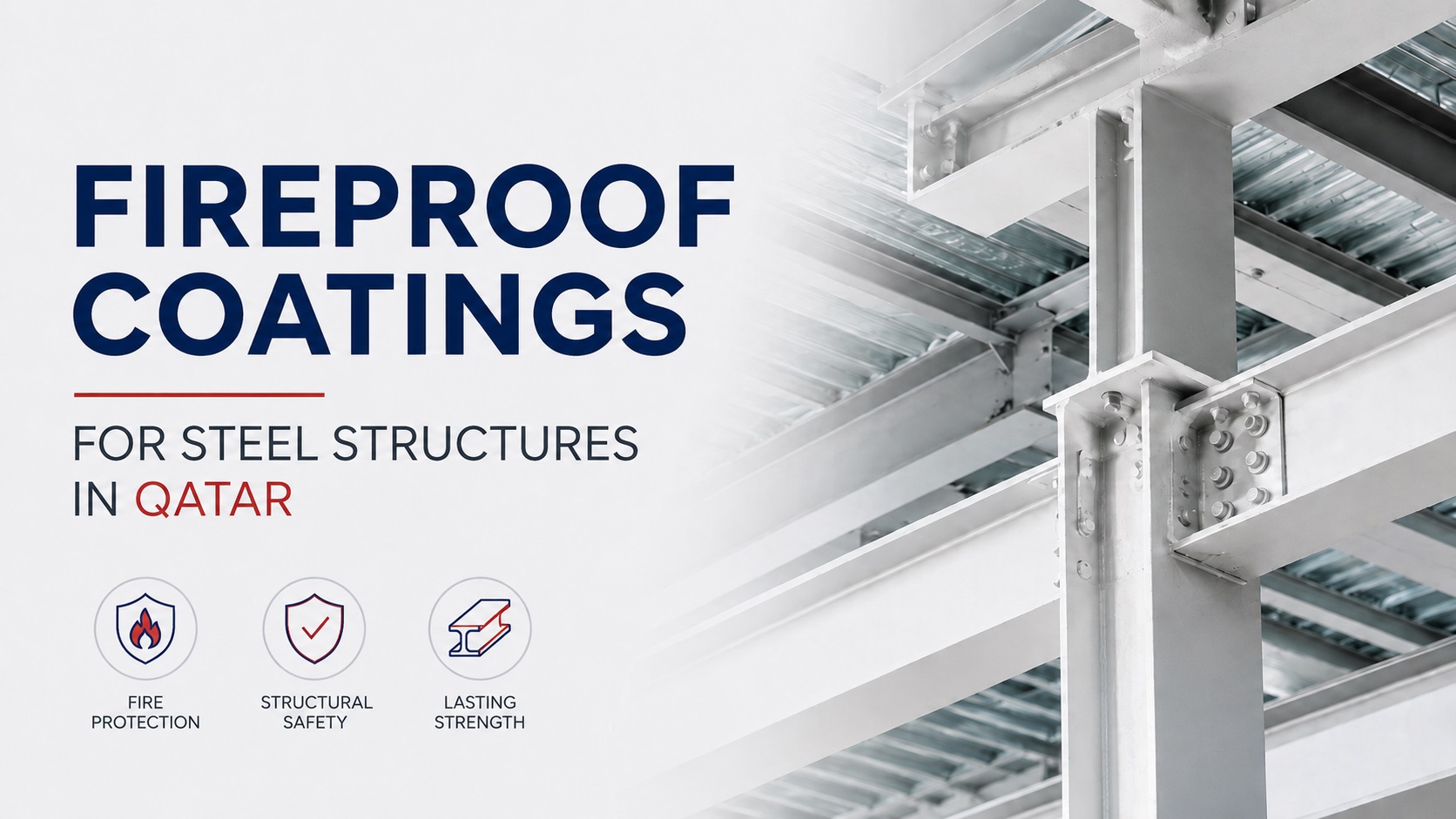
 Fireproofing
Steel is one of the most widely used materials in Qatar’s commercial, industrial, warehouse, infrastructure and high-rise projects. It is strong, flexible and efficient to build with. During a fire, however, exposed structural steel can lose strength as temperatures rise, which can affect the stability of beams, columns and load-bearing members.
That is why fireproof coating is an important part of passive fire protection for steel structures. A properly selected and professionally applied fireproof coating helps slow heat transfer to the steel, allowing the structure to maintain its load-bearing function for a specified fire-resistance period.
For contractors, consultants, building owners and facility managers in Qatar, the key question is not simply whether steel should be protected. The more important question is: which fireproof coating is right for the project?
At Ceasefire Solutions, we provide professional fireproof coating and fire proof painting services in Qatar for commercial, industrial and structural steel applications.
What Is Fireproof Coating for Steel Structures?
Fireproof coating for steel structures is a passive fire protection system applied to steel beams, columns, frames and other structural members to delay temperature rise during fire exposure.
Unlike active fire protection systems such as alarms, sprinklers and suppression systems, passive fire protection does not need activation. Once installed, it becomes part of the building’s fire safety design. During fire exposure, the coating forms a protective thermal barrier that helps the steel remain stable for longer.
The most common fireproof coating systems used for structural steel include intumescent coatings, cementitious fireproofing, epoxy-based coatings, spray-applied fire resistive materials and fireproof board systems. Each option has a different purpose, finish, application method and performance profile.
For a deeper explanation of why steel protection is critical, read our related guide on fireproof coating for structural steel in Qatar.
Why Choosing the Right Fireproof Coating Matters in Qatar
Choosing the right fireproof coating is not the same as choosing ordinary paint. Fireproof coating is a life safety system. It must match the project specification, steel profile, fire rating requirement, exposure condition and inspection documentation needs.
In Qatar, many buildings include exposed or concealed structural steel in warehouses, factories, malls, offices, schools, showrooms, industrial plants, service areas, high-rise buildings and infrastructure projects. Each environment has different requirements.
A coating suitable for exposed architectural steel may not be the best option for a warehouse. A system used for internal commercial steel may not be strong enough for external industrial exposure. A low-cost coating may create future problems if it does not meet the required fire rating, documentation or durability needs.
Ceasefire Solutions helps contractors, consultants, building owners and facility managers select the right fireproof coating system based on building use, steel exposure, project specifications, required fire rating, application conditions and documentation requirements.
Main Types of Fireproof Coatings for Steel Structures
There are several types of fireproof coatings used for structural steel. The best choice depends on the project requirement, fire scenario, surface exposure, budget, finish expectation, and approval process.
1. Intumescent Fireproof Coating
Intumescent fireproof coating is one of the most commonly used systems for structural steel where both fire protection and appearance are important. It is applied like paint, but it reacts differently during a fire.
When exposed to high heat, intumescent coating expands and forms a thick insulating char layer. This expanded layer reduces heat transfer to the steel and helps the structure maintain its strength for longer.
Intumescent coatings are suitable for:
- Exposed steel beams and columns
- Commercial buildings
- Shopping malls
- Airports and public buildings
- Office towers
- Architectural steel where appearance matters
The main advantage of intumescent coating is that it provides fire protection without adding heavy bulk to the steel structure. It can also be finished with a compatible topcoat, making it suitable for visible steelwork.
However, intumescent coating must be applied carefully. Surface preparation, primer compatibility, coating thickness, curing time, and topcoat selection all affect performance. It is not a normal decorative paint, so it should not be applied casually or covered with random coatings later.
For projects where clean appearance and certified fire protection are both important, intumescent coating is often the preferred solution.
2. Cementitious Fireproof Coating
Cementitious fireproof coating is a spray-applied or trowel-applied material that forms a thick protective layer around steel members. It is commonly used in large industrial, commercial, and utility spaces where appearance is less important than performance and cost efficiency.
Cementitious fireproofing is suitable for:
- Warehouses
- Industrial buildings
- Utility areas
- Back-of-house spaces
- Parking structures
- Large steel frameworks
- Non-decorative steel members
The key advantage of cementitious fireproof coating is that it provides robust fire resistance at a practical cost for large areas. It is often selected where steel members are not visible or where a textured finish is acceptable.
Because cementitious coatings are thicker than intumescent coatings, they may not be ideal for exposed architectural steel. They also require correct surface preparation, proper application thickness, curing, and inspection to avoid cracking, delamination, or weak adhesion.
For many industrial projects in Qatar, cementitious fireproof coating remains a practical and dependable option when applied by trained professionals.
3. Epoxy-Based Fireproof Coating
Epoxy-based fireproof coating is a high-performance solution often used in demanding environments where steel may face harsh exposure, mechanical stress, chemical exposure, or hydrocarbon fire risk.
This type of coating is commonly considered for:
- Oil and gas facilities
- Industrial plants
- Offshore and marine-related environments
- Petrochemical areas
- Refineries and process facilities
- External steel exposed to aggressive conditions
Epoxy-based systems generally provide strong durability and resistance compared to standard coating options. They are useful where the project requires both fire protection and enhanced environmental performance.
However, epoxy-based fireproof coating is usually more specialized. It may involve higher material and application costs, stricter preparation requirements, and detailed technical approvals. For this reason, it is normally selected after reviewing the project specification, fire scenario, exposure condition, and required performance documentation.
For industrial and high-risk environments, epoxy-based fireproofing can be the right choice when long-term durability and advanced protection are required.
4. Spray-Applied Fire Resistive Materials
Spray-applied fire resistive materials, often called SFRMs, are used to protect steel members by creating an insulating layer over the surface. These materials can include mineral-based or gypsum-based products depending on the system.
SFRMs are commonly used for:
- Large steel areas
- Complex steel shapes
- Structural frames
- Commercial and industrial projects
- Areas where quick coverage is required
The main benefit of SFRM systems is their ability to cover large areas efficiently. They can be effective for complex steel profiles where board systems or manual coating methods may be less practical.
The quality of SFRM application depends heavily on trained applicators, equipment, substrate condition, thickness control, and curing. It is also important to confirm whether the finish is suitable for the final location, especially if the steel will remain visible or exposed to moisture and impact.
Intumescent vs Cementitious Fireproof Coating: Which Is Better?
Both intumescent and cementitious systems can provide effective fire protection when selected and applied correctly. The better option depends on the project.
| Project Requirement | Better Option |
|---|---|
| Exposed steel with clean painted finish | Intumescent coating |
| Concealed steel in warehouse or plant room | Cementitious coating |
| Large-area cost efficiency | Cementitious coating or SFRM |
| Decorative topcoat requirement | Intumescent coating |
| Industrial or harsh exposure | Epoxy-based fireproof coating |
| External or high-risk process environment | Epoxy-based system |
| Practical fire protection for service areas | Cementitious coating or SFRM |
| Dry boxed protection | Fireproof board system |
For most commercial and architectural steel applications in Doha and across Qatar, intumescent coating is often preferred when the steel is visible and appearance matters. For warehouses, plant rooms, back-of-house areas and concealed structural steel, cementitious fireproofing or SFRM may be more practical.
The right decision should be based on the required fire rating, steel design, site conditions, project specification and approval documentation requirements.
How to Choose the Right Fireproof Coating for Your Project
Choosing a fireproof coating should not be based only on price. A low-cost coating can become expensive if it fails inspection, requires rework, does not match the required fire rating or performs poorly in the site environment.
Before selecting a coating system, consider the following factors.
1. Required Fire-Resistance Rating
The fire-resistance rating may be 30, 60, 90, 120 minutes or more depending on the project specification, building use and authority requirements. The coating thickness and system selection must match the required rating.
2. Steel Section and Exposure
Different steel profiles heat at different rates. Beams, columns, hollow sections and complex profiles may require different coating thicknesses. Whether the steel is exposed on one side, three sides or all sides also affects the design.
3. Interior or Exterior Location
Internal steel may have different coating requirements from external steel. External steel may need stronger corrosion protection, weather-resistant topcoats and additional durability against humidity, heat, dust and environmental exposure.
4. Aesthetic Requirement
If the steel is visible, a smooth finish may be important. Intumescent coating is often selected for exposed architectural steel because it can provide fire protection without hiding the steel profile.
5. Site Conditions
Temperature, humidity, ventilation, dust, access, working height, nearby trades and project schedule can all affect coating quality. Proper planning helps avoid curing issues, contamination and uneven application.
6. Documentation and Handover
Approved product data sheets, test certificates, method statements, inspection records, thickness reports and application records are important for consultant review, project handover and approval support.
If your project also requires active fire safety systems, Ceasefire Solutions can support fire detection and suppression systems along with passive fire protection planning.
Fireproof Coating Application Process
A fireproof coating system performs correctly only when it is applied properly. Even a high-quality coating can fail if the steel surface is not prepared, the primer is incompatible, the coating thickness is incorrect or the final inspection is not documented.
At Ceasefire Solutions, fireproof coating work is handled through a careful process.
1. Site Inspection and Requirement Review
The process begins with reviewing the building type, steel structure, project specification, required fire rating, exposure condition and application area. Our team checks whether the steel is internal, external, exposed, concealed, industrial or decorative.
2. Coating System Selection
Based on the project requirement, we recommend the most suitable system, such as intumescent coating, cementitious fireproofing, epoxy-based coating, SFRM or board protection.
3. Surface Preparation
Steel surfaces must be clean, dry and free from loose rust, oil, grease, dust, mill scale and contamination. Proper surface preparation is essential for adhesion and long-term performance.
4. Primer Application
A compatible primer is applied where required. The primer helps protect the steel and creates a suitable base for the selected fireproof coating system.
5. Fireproof Coating Application
The fireproof coating is applied using the recommended method, such as airless spray, roller, brush, trowel or spray equipment depending on the system. The application thickness is controlled to meet the specified fire-resistance rating.
6. Thickness Check and Quality Inspection
Dry film thickness or applied thickness is checked and recorded. Any uneven areas, insufficient coverage or damaged sections must be corrected before completion.
7. Topcoat or Protective Finish
Where required, a topcoat is applied to protect the coating from humidity, weathering, abrasion or site exposure. For visible steel, the topcoat can also provide the required colour and finish.
8. Documentation and Handover
Final documentation may include product data sheets, method statements, test certificates, application records, thickness reports and inspection details.
For buildings preparing for approval or renewal, our team also provides Civil Defence certification renewal support and Civil Defense approval support for CR renewal.
QCDD Documentation and Inspection Considerations
In Qatar, fireproof coating work should be planned with compliance and documentation in mind from the beginning. Fireproof coating is not just a paint application. It is a technical passive fire protection system that must be selected, applied and documented correctly.
Important documentation may include approved material details, technical data sheets, test certificates, application method statements, coating thickness records, inspection reports and maintenance recommendations.
This documentation helps contractors, consultants, building owners and facility managers demonstrate that the selected fireproof coating system has been applied according to the required project specification.
Ceasefire Solutions supports fireproof coating projects in Qatar with coating selection, professional application, thickness checks, quality control and documentation support to reduce inspection delays and rework risks.
Common Fireproof Coating Mistakes to Avoid
Many fireproofing problems happen because the coating is treated like normal paint. Fireproof coating requires technical control from start to finish.
Avoid applying fireproof coating over poorly prepared steel. Do not use incompatible primers, basecoats or topcoats. Do not select a system without confirming the required fire rating. Do not ignore humidity, curing time or site contamination. Do not leave exposed coatings unprotected where a topcoat is required. Do not skip thickness checks, inspection records or handover documentation.
The safest approach is to involve a qualified fire protection company early, especially before consultant submission, site application, project handover or inspection.
Fireproof Coating for Different Building Types in Qatar
Different facilities need different fireproofing strategies.
For commercial buildings, malls, offices and showrooms, intumescent fireproof coating is often preferred because it provides a clean painted finish while protecting visible steel.
For warehouses, industrial facilities, back-of-house areas and plant rooms, cementitious coating or SFRM may be more practical because these systems provide efficient coverage for large or concealed steel areas.
For oil and gas, petrochemical, marine or harsh industrial environments, epoxy-based fireproofing may be required where stronger durability and environmental resistance are important.
For high-rise buildings, fireproof coating should be coordinated with other life safety systems such as staircase pressurization systems, fire alarms, emergency lighting, sprinklers and suppression systems.
For facilities that need complete fire safety planning, Ceasefire Solutions also provides fire suppression systems in Qatar, portable and trolley fire extinguishers, fire-rated doors and fire safety equipment trading and distribution.
Why Choose Ceasefire Solutions for Fireproof Coating in Qatar?
Ceasefire Solutions is a trusted fire protection company in Qatar providing active and passive fire protection solutions for commercial, residential, industrial and infrastructure projects.
Our fireproof coating service is designed for clients who need more than basic painting. We support the full process from site inspection and coating selection to professional application, finishing, quality control and documentation.
When you work with Ceasefire Solutions, you get a practical team that understands fire safety requirements, project timelines, site conditions and the importance of proper handover documentation.
We support building owners, contractors, consultants and facility managers across Qatar with reliable fireproof coating solutions for steel structures.
Ceasefire Solutions also provides service and maintenance of fire fighting systems to help businesses keep their fire protection systems ready, reliable and compliant after installation.
Need Fireproof Coating for Steel Structures in Qatar?
Protecting structural steel should not be left until the final inspection stage. The right fireproof coating system can help protect lives, reduce fire damage, support compliance and improve the long-term safety of your building.
Contact Ceasefire Solutions today for a site inspection, coating recommendation or quotation for fireproof coating in Qatar.
Call: +974 55324195
Email: sales@ceasefireme.com
Comments are closed